
Parker's Picks — Ostrich Fern
/Ostrich fern is one of North America’s most iconic native ferns, admired for its tall, vase-shaped form and feathery fronds that resemble the plumes of an ostrich. It spreads into lush colonies in moist, shady landscapes and produces the famous edible fiddleheads each spring.
Growing 3 to 6 feet tall, ostrich fern thrives in part shade to full shade with consistently moist, organically rich soil. Although naturally found in floodplains and woodlands, it is surprisingly adaptable to heavy clay soils, provided drainage is adequate. It is an excellent choice for woodland gardens, rain gardens, pond edges, streambanks, and other moist landscape settings.
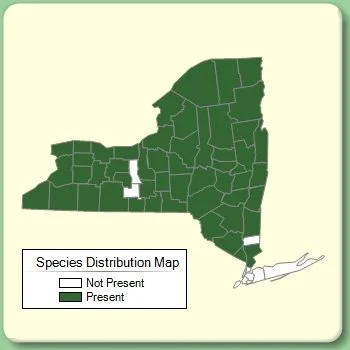
Ostrich Fern range map (New York flora atlas)
Consistent moisture is essential, as prolonged dry periods can cause the fronds to brown prematurely. Ostrich fern spreads by underground rhizomes, so careful site selection is important. I prefer letting it naturalize within woodland settings where sunlight, drier soils, or open lawn naturally define its boundaries. In my experience, it looks best planted in drifts with other moisture-loving native woodland species such as wild geranium (geranium maculatum), Virginia bluebells (mertensia virginica), Jacob’s ladder (polemonium reptans), waterleaf (hydrophyllum canadense; h. virginianum), sensitive fern (onoclea sensibilis), and native anemones (anemone canadensis, a. quinquefolia, a. virginiana,etc). Cut back old fronds in late winter or early spring before new growth emerges.
While ferns do not produce flowers for pollinators, ostrich fern provides exceptional wildlife habitat. Dense colonies offer shelter for frogs, salamanders, rabbits, and other small wildlife, while woodland birds use the foliage for nesting and cover. It also serves as a host plant for several specialized native insects. Mature plants are generally deer and rabbit resistant, although tender fiddleheads may occasionally be browsed. Like most plants, deer may feed on them when other food sources are limited.
The young fiddleheads are a prized spring delicacy and should only be harvested when tightly coiled. To protect the plant, harvest no more than one-third of the fiddleheads from each crown and always cook them thoroughly before eating. Once prepared, they have a mild flavor often compared to asparagus, green beans, and broccoli. In my experience, they’re excellent in pasta dishes, but my personal favorite is pickled fiddleheads with hot peppers.
For the Haudenosaunee, ostrich fern provided an important spring food following the long winter months. The fiddleheads were traditionally harvested, cleaned, and boiled before eating, while preparations from the rhizomes were also used in traditional medicine. The distinctive spiral of the emerging fiddlehead inspired designs in Haudenosaunee artwork, symbolizing renewal, growth, and the continual cycle of life.