
Parker's Picks — New York Ironweed
/New York Ironweed, vernonia noveboracensis, is a stately native perennial known for its vibrant clusters of deep purple flowers that bloom from late summer into early fall. Growing 4–8 feet tall, its strong, upright stems add dramatic height and structure to the back of borders, rain gardens, and naturalized landscapes. The name “Ironweed” comes from its exceptionally tough stems and the rusty color of its seed heads after flowering.
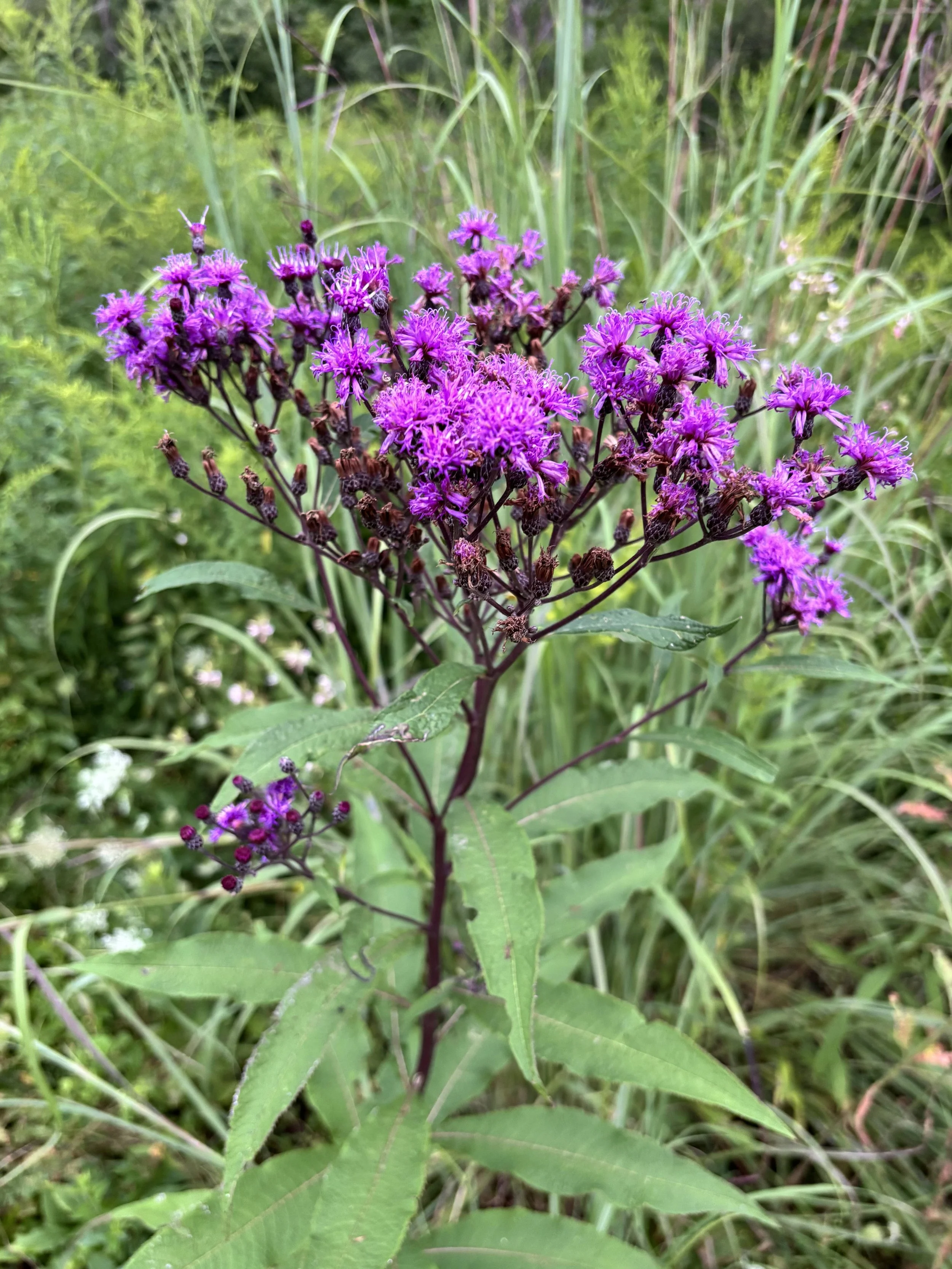
New York Ironweed, vernonia noveboracensis, blooming in Chautauqua county. (Photo by Ken Parker)
It performs best in full sun and moist, fertile soils but tolerates seasonal flooding and periods of drought once established. These qualities make it an excellent choice for rain gardens, bioswales, and other green infrastructure plantings. In my experience, New York Ironweed performs especially well in clay soils. It is highly resistant to deer and rabbits and is one of the few native perennials that thrives near black walnut trees.
New York Ironweed is one of the most important late-season nectar plants for pollinators. Its flowers attract native bees, bumblebees, butterflies, and migrating Monarchs, while also serving as a larval host for the American Lady butterfly. The persistent seed heads provide food for songbirds throughout fall and winter, making it a valuable addition to wildlife-friendly gardens.
The Haudenosaunee traditionally valued New York Ironweed as a medicinal plant. Root and leaf preparations were used to support digestive and women’s health, while the sturdy stems were occasionally used as bedding material for temporary shelters.