
Parker's Picks - Arrowwood Viburnum
/
Arrowwood Viburnum (viburnum dentatum)
A common Western New York native shrub, Arrowwood Viburnum typically grows 6–8 feet tall and wide in home landscapes. It performs best in full sun to partial shade and adapts well to a wide range of soils, though it thrives in moist, well-drained loam.
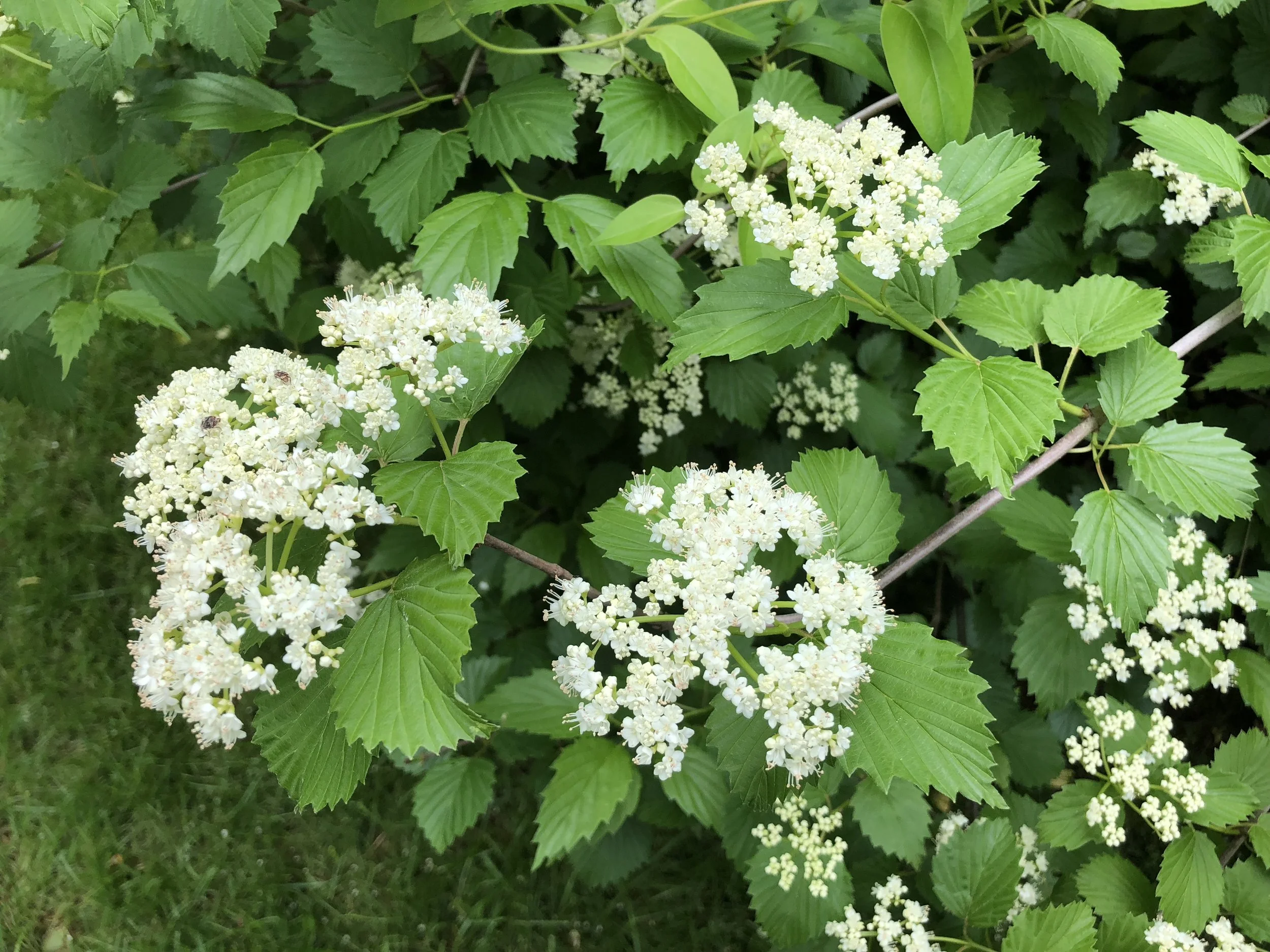
Showy clusters of creamy-white flowers appear from late May through June, followed by blue-black berries in late summer. Glossy dark green foliage and coarsely toothed leaf margins give the shrub a handsome appearance throughout the growing season. Prune shortly after flowering, as next year’s flower buds form on old wood.
Arrowwood Viburnum is an excellent wildlife plant. Its flowers attract a variety of native bees and other pollinators, while it serves as a larval host for the Spring Azure butterfly and Hummingbird Clearwing moth.
While the berries are technically edible to humans, I’ve found there is far more seed than fruit, with a rather bland flavor. Wildlife, however, tells a different story. The fruits are exceptionally high in fat—over 40% by some estimates—making them an important energy source for migrating songbirds such as bluebirds, catbirds, and robins.
Viburnum was valued by the Haudenosaunee for its strong, straight wood. Its shoots were commonly used for arrow shafts, while flexible young branches served as lashings and bindings. The dense, durable wood was also used to make tool handles and other useful items.